Your Parents Are Moving In: How to Blend Two Households Without Anyone Feeling Like a Guest
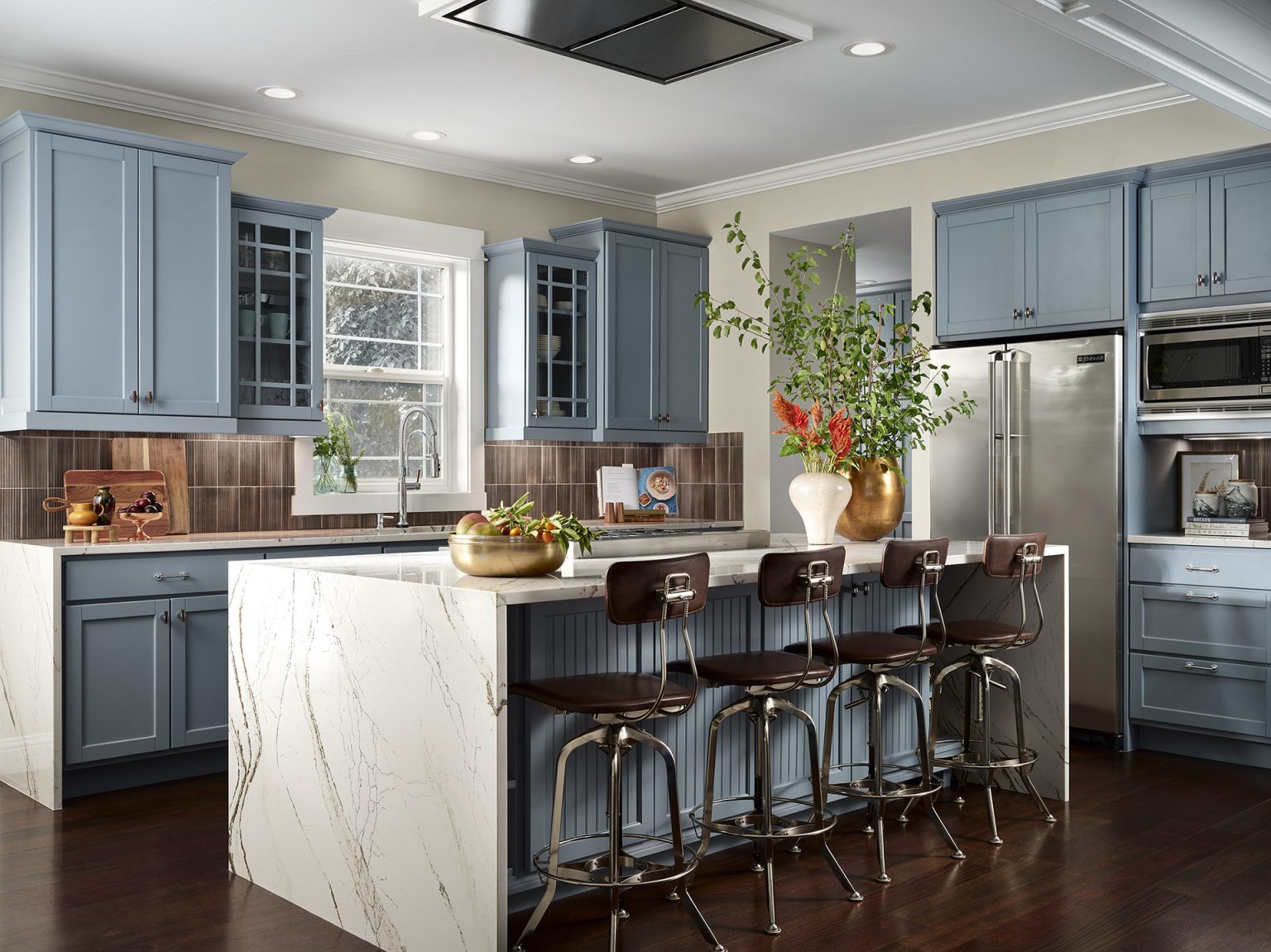
Parents moving in works best when each generation keeps one room they control completely, and the shared rooms are built from scratch rather than from whoever’s furniture arrived first. Start by deciding what the shared rooms are. Let each household keep full authority over their private space, down to the paint colour. Then furnish the shared rooms together, with both households choosing, even if that means buying something new that neither of you owned before.
The mistake almost everyone makes is treating this as a storage problem. It isn’t. It’s a question of who gets to feel at home.
I designed a multigenerational home for my own parents, and they had notes. That is roughly how I learned most of what follows.
Parents moving in: the question nobody asks out loud
Most families plan the move carefully. They measure the room. They work out the bathroom. They talk about money, and about who drives whom to appointments.
What they rarely say aloud is the thing everyone is actually worried about: whose house is this going to feel like?
The adult child worries about losing their home to someone else’s dining set. The parent worries about becoming a long-term guest in a house full of furniture that was chosen without them. Nobody says either sentence. It comes out instead as an argument about a sideboard.
Design can’t resolve a family’s feelings. But a great deal of the tension is architectural, and that part can be solved before anyone unpacks a box.
The rule that solves most of it
Give every household one room they control completely.
Not a room they were given. A room they decide. The colour on the walls, the art, the lamp that doesn’t match anything, the chair nobody else finds comfortable. No approval needed from anyone.
This sounds small. It does more work than any other decision you will make.
A person with one room of their own can be generous everywhere else. They can let the living room go a direction they wouldn’t have chosen. They can accept that the kitchen runs on somebody else’s system. The concession costs them little, because they have somewhere that answers to them.
A person with no such room defends everything. Every shared decision becomes the last stand, because it’s the only ground they have.
Four decisions to make before the moving van arrives
Make these while everyone is still being polite. They are much harder to settle once the boxes are in the hall.
1. Name the shared rooms and the private ones. Write it down. Usually the living room, kitchen and dining room are shared; bedrooms and one sitting area each are private. The bathroom question is its own conversation, and worth having early.
2. Agree who decides what, by room. In private rooms, that household decides alone. In shared rooms, both decide together. Say it out loud so nobody has to guess later whether they’re allowed to object.
3. Decide where the television goes, and whether there are two. This sounds trivial. It is the single most common source of friction in multigenerational homes, because it determines who can relax in the evening without negotiating.
If you want these worked through room by room, the Multigenerational Home Planner covers each one in order.
4. Set a budget for new shared pieces. Not large. But if every shared room is furnished entirely from one household’s existing furniture, the other household is living in someone else’s house, and they will know it.
What to do with the furniture nobody loves
Two households means roughly twice the furniture and the same amount of floor. Something has to go, and that is where it turns personal.
Sort every piece into one of four groups. Do it together, in one sitting, before anything moves.
| Group | What it means | What happens to it |
|---|---|---|
| Loved | Someone would be genuinely sad to lose it | It stays, and it gets a good position |
| Useful | Does a job well, no feeling attached | Keep if there is room, replace without guilt |
| Inherited | Nobody chose it, nobody can release it | Keep one. Photograph the rest |
| Filler | Bought to fill a gap in another house | Let it go |
Most of the volume is filler, and almost none of the argument is. The arguments live in the inherited pile, which is why that row matters most.
For inherited pieces, keep the one that carries the story and let the others go. A grandmother’s dining table earns its place. Her four spare side chairs, stored in a garage for a decade, do not. Photographing them before they leave is not sentimentality; it’s what makes letting go possible.
When taste is the real conflict
Sometimes the furniture sorts itself out and the households still can’t agree, because one likes dark wood and heavy drapery and the other wants white walls and nothing on them.
Don’t split the difference. A room that averages two tastes satisfies neither and usually looks confused.
Give each room one point of view instead. The living room can be the parents’ register. The family room can be yours. Both are honest, both are finished, and each household has somewhere in the shared part of the house that speaks their language.
If the heavier taste is also the older one, there is often more than preference underneath it. Furniture that travelled with someone through decades, or across countries, carries proof of where they came from. Asking them to put it in storage is not a question about style. Treat it as what it is, and the conversation goes differently. I’ve written more about what objects carry across a move and why the most personal rooms are rarely the most expensive ones.
Common questions
How do we decide whose furniture to keep when both households have a full set?
Decide room by room, not piece by piece. Assign each shared room to one household’s furniture, so each room reads as finished rather than assembled from two. Then let the other household choose the art, the lighting or the textiles in that room, so their hand is in it.
Should my parents have their own kitchen?
A second kitchen is the most reliable way to reduce daily friction, because cooking is where routines collide hardest. If a full second kitchen isn’t possible, a kettle, a small fridge and a worktop in their sitting area solves most of it for a fraction of the cost.
How much space does an in-law suite need?
Enough for a bedroom, a bathroom, and somewhere to sit that isn’t the bed. The sitting area is the part people cut first and regret most, because without it there is nowhere to be awake alone.
What if we can’t afford to renovate before they move in?
Do the private room first and leave the shared rooms as they are. One room that belongs to them, done properly, buys more goodwill than a whole house done half way.
How do we stop my parents feeling like guests?
Give them authority over something, not just space. A room they decorate, a shelf in the kitchen that is theirs, a say in a shared room’s furniture. Guests are people who can’t change anything.
Where to start
If your parents are moving in within the next year, the four decisions above are the ones to make first, and they cost nothing but an honest conversation.
When you’re ready to plan the rooms themselves, the Multigenerational Home Planner walks you through it room by room, including the questions most families only discover they should have asked once everyone has moved in.