What Boutique Hotel Interior Design Costs Per Key
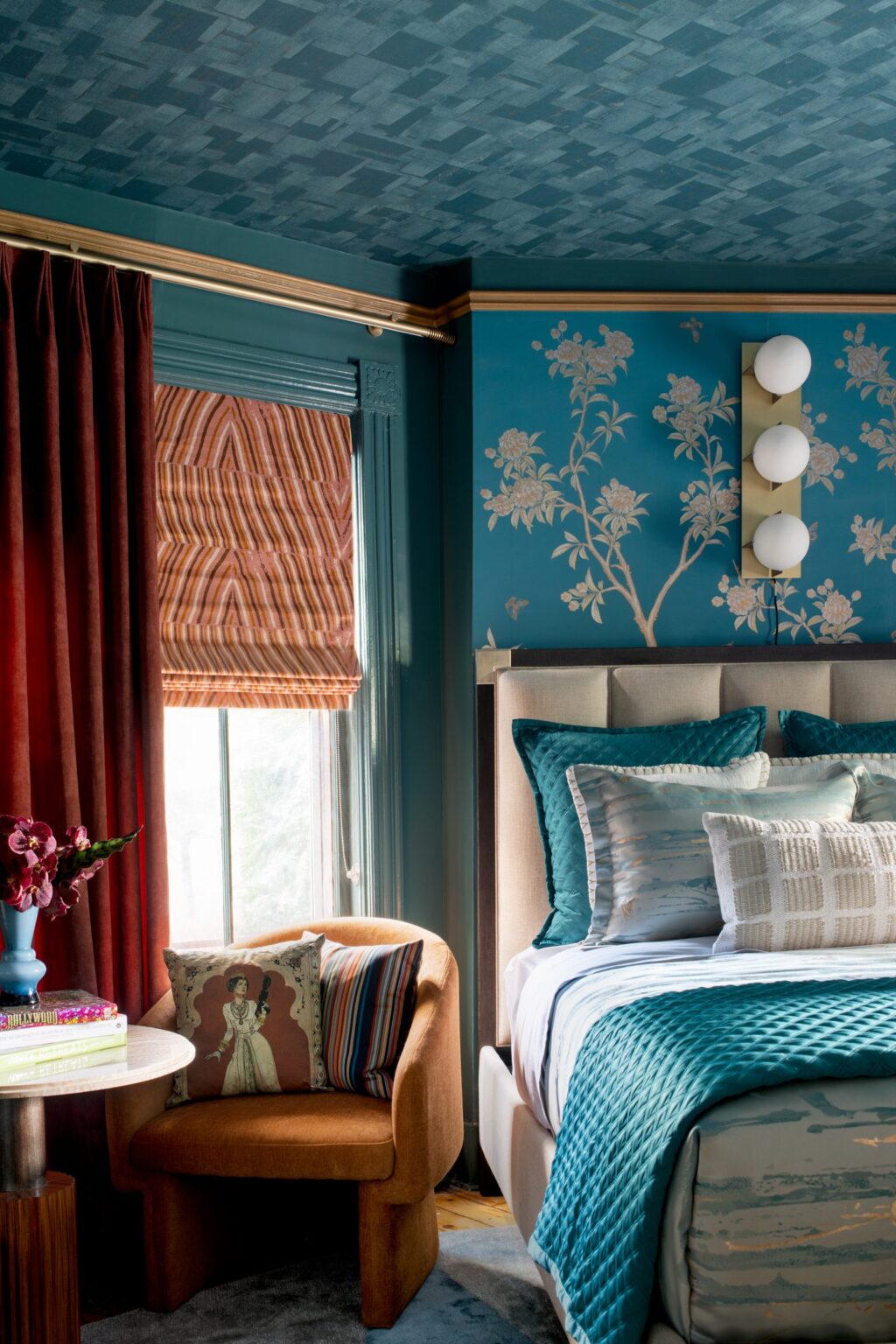
Boutique hotel cost per key starts with the same math as any hotel: the total cost of a project divided by its number of guest rooms. It is how owners, lenders and brands compare budgets. In the 2023 HVS U.S. Hotel Development Cost Survey, the median all-in development cost per key was about $242,000 for a select-service hotel, $380,000 for full-service and $850,000 for luxury. The interiors share of that, furniture, fixtures and equipment (FF&E), had medians of about $21,000, $34,000 and $63,500 per key. A boutique hotel has no category of its own in the survey, so the useful question is which of those lines your guest promise sits closest to.
Those figures are industry benchmarks published by HVS, not R/terior Studio rates, and HVS itself says they are a general guide rather than a quote for any real project. They are still the best public starting point we know of, and they are far more useful than the round numbers that circulate online.
What cost per key actually measures
The arithmetic is simple. Add up everything it takes to open or renovate the property, then divide by the number of rooms you can sell. A 40-key hotel with a $13.6 million budget has a cost per key of $340,000.
What goes into the top line is where people get confused. HVS breaks a hotel development budget into six categories:
- Land — the site itself.
- Building and site improvements — construction, the hard costs.
- Soft costs — architecture, engineering, interior design fees, permits, legal, financing.
- FF&E — furniture, fixtures and equipment, everything a guest sees and touches that is not built in.
- Pre-opening and working capital — hiring, training and the cash to run before revenue arrives.
- Developer fee — the developer’s compensation for running the project.
So when someone quotes you a cost per key, the first question is which of those six they included. An interiors-only number and an all-in number can differ by a factor of ten, and both get called cost per key.
The benchmarks, by hotel type
These are the medians HVS published in its 2023 survey, based on budgets for projects proposed or under construction in 2021 and 2022. Medians are more useful than averages here, because a handful of very expensive projects pull averages up.
| Hotel type | FF&E per key (median) | All-in development cost per key (median) |
| Limited-service | $15,833 | $166,393 |
| Select-service | $21,189 | $241,932 |
| Redevelopment projects | $26,267 | $317,333 |
| Full-service | $33,914 | $380,231 |
| Luxury | $63,508 | $849,789 |
Source: HVS U.S. Hotel Development Cost Survey 2023. The 2025 edition puts the luxury median above $1 million per key, so treat the luxury line as a floor rather than a ceiling.
Two things stand out. FF&E is a small share of the total, roughly 7 to 9 percent of the median all-in figure in every category above. And it is the share guests actually experience. A lender looks at the whole number. A guest looks at the chair.
Why boutique hotel cost per key behaves differently
Boutique properties break the averages for one structural reason: they spread fixed costs across fewer rooms.
A lobby, a bar and an arrival sequence cost roughly the same to design and furnish whether they serve 20 rooms or 200. Take a public-space package of $400,000 as an illustration. Across 200 keys it adds $2,000 per key. Across 20 keys it adds $20,000 per key. Nothing about the lobby changed. The divisor did.
The same logic applies to custom pieces. A bespoke headboard designed for one property carries its design and prototyping cost across however many rooms use it. In a 300-room tower, that cost disappears. In a 24-room inn, it is visible on every line.
Older buildings add a third factor. Many boutique hotels are conversions: a Victorian, a former office, a motor court. Irregular rooms mean fewer repeated room types, which means more custom sizing and less of the volume pricing a new-build prototype gets.
None of this makes boutique hotels poor investments. It means a boutique budget should be built from the property up, not borrowed from a chain average.
Cost per key for renovations
Renovations are budgeted per key too, but the range is wider because the scope varies so much. The useful distinction is between two kinds of work.
| Soft renovation | Hard renovation | |
| What changes | Soft goods: bedding, drapery, carpet, upholstery, wall vinyl, lighting, artwork | Case goods, bathrooms, layouts, ceilings, sometimes mechanical and life safety systems |
| Rooms out of service | Short, often room by room | Longer, often by floor or the whole property |
| Permits | Often limited | Usually required, and they can trigger current accessibility and code upgrades |
| Main budget risk | Lead times on fabric and carpet | What is found once walls and floors are opened |
We have deliberately left dollar ranges out of this table. Renovation pricing depends on the building, the region and the scope more than any survey can capture, and the figures that circulate online are rarely sourced. HVS publishes a separate Hotel Cost Estimating Guide for renovation pricing; for a real number, a contractor and a procurement firm pricing your actual scope will beat any benchmark.
Where hotel budgets actually go wrong
In our experience, budgets rarely fail on the big line items. They fail in the gaps between them.
Landed cost versus list price. A chair’s price is not what it costs to put that chair in a room. Freight, receiving, warehousing, delivery, installation and sales tax are often quoted separately, and they add up.
OS&E. Operating supplies and equipment, the linens, glassware, hangers and in-room amenities, are a separate budget from FF&E. Owners who assume one covers the other find the gap late.
Design decisions made after pricing. Every change made after the procurement budget is set ripples through lead times and freight. The cheapest moment to change your mind is during concept.
No contingency for an older building. Conversions surprise people. A sensible budget assumes they will.
How the design fee fits in
Interior design fees sit in soft costs, not in FF&E, which is why they are easy to lose sight of when comparing cost per key. Studios charge in different ways: a fixed fee by phase, a percentage of the FF&E budget, an hourly rate, or a combination. None is wrong. What matters is knowing which one you are being quoted, and whether procurement, the buying, tracking and receiving of every item, is included or priced separately.
If you are comparing proposals, our guide to what to ask before you hire a hospitality designer covers the questions that make fees comparable, and how FF&E procurement works on a hotel project explains what that part of the fee buys.
Common questions
What is a good cost per key for a boutique hotel?
There is no single good number, because boutique covers everything from a 12-room inn to a 150-room lifestyle hotel. Start from the HVS line your guest experience resembles, full-service or luxury for most independent boutique properties, then adjust for key count. Fewer keys push the per-key number up, even when the total budget is modest.
Does cost per key include land?
An all-in development cost per key usually does, which is one reason it varies so much by city. An FF&E cost per key never does. Always ask which number you are looking at before comparing two projects.
How much of a hotel budget goes to FF&E?
In the 2023 HVS survey, median FF&E was roughly 7 to 9 percent of the median all-in cost per key across limited-service, select-service, full-service and luxury hotels. In a renovation, FF&E is a much larger share, because there is no land or new construction in the total.
Is the design fee part of FF&E?
No. Design fees are soft costs. Procurement services may be billed as a fee or as a markup on purchases, so ask how they are charged and whether they appear inside or outside the FF&E line.
How often does hotel furniture need replacing?
Soft goods wear out first and are typically refreshed more often than case goods such as beds, desks and dressers. LODGING magazine describes a roughly seven-year replacement cycle for furniture, and branded hotels often have the timing set for them through a property improvement plan. Our guide to PIP renovations covers what those plans require.
Can I lower cost per key without the hotel looking cheaper?
Yes, by spending unevenly on purpose. Put the money where guests touch and photograph: the bed, the bathroom, the arrival, the bar. Hold back where they do not: back-of-house finishes, corridor carpet patterns that hide wear, standard-size case goods in rooms nobody remembers. A clear design story helps here, because it tells you which pieces carry the identity and which can be quiet.
Where to start
If you are at the budgeting stage, the most useful thing you can do is decide what kind of stay you are promising before anyone prices a chair. That promise sets which benchmark line you belong on, and it decides where the money should be uneven.
Our Design Strategy Session is built for that moment: a single working session to define the guest experience, the scope and the budget logic before you commit to a full design team. You can see how we approach hospitality projects on our boutique hotel interior design page, or read our approach first.